When a friend sent me this bright orange and yellow mushroom as a gift, I was instantly filled with excitement and curiosity. Its vibrant color was so stunning that my first instinct was to throw it straight into a pan, but an overwhelming wave of doubt quickly stopped me in my tracks. I had heard terrifying stories about certain wild mushrooms being extremely toxic, where even a tiny mistake could be dangerous. On one hand, I was dying to cook it, but on the other, the fear of poisoning kept me completely torn!
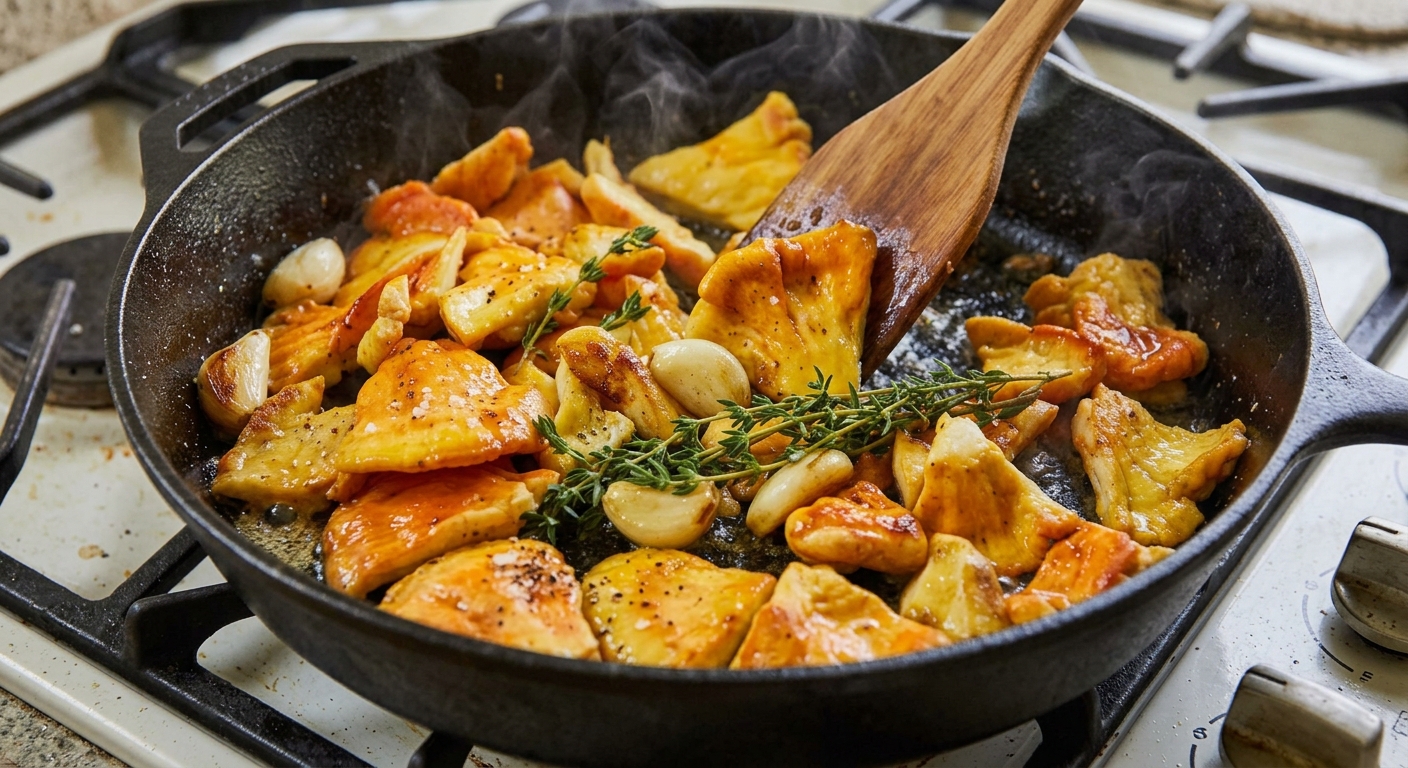
After doing thorough research and finally confirming that it was indeed the harmless, mouthwatering “Chicken of the Woods,” I built up the courage to cook it. But the challenge didn’t end there. The biggest hurdle came during the cooking process—this mushroom acts like a total sponge, absorbing moisture rapidly and turning rubbery and soggy in the pan. Terrified of ruining it, I quickly adapted: I dry-sautéed the slices over medium heat first to evaporate the excess moisture, and only then added a generous knob of butter, minced garlic, and fresh thyme over high heat. The result was pure magic—a golden, crispy exterior with a juicy, meat-like texture on the inside that tasted just like chicken!
Chicken of the woods (Laetiporus) is a prized wild mushroom known for its meaty, chicken-like texture and rich flavor. Because wild mushrooms absorb flavors easily and require thorough cooking to ensure digestability, simple sautéing or frying works best.
Essential Rules Before Cooking
-
Never Eat It Raw: Raw chicken of the woods can cause upset stomach. Always cook thoroughly.
-
Harvest Young & Tender: Use only the soft, outer margins. Tough, woody center parts remain chewy even after long cooking.
-
Avoid Water Soaking: Brush off dirt with a damp paper towel or pastry brush. Soaking makes them soggy.
-
Test a Small Portion First: A small percentage of people experience digestive sensitivity to this species. Eat a small cooked bite and wait 24 hours before consuming a full meal.
Method 1: Classic Garlic & Herb Sauté
-
Prep: Slice the tender edges of the mushroom into $1/2$-inch strips or bite-sized chunks.
-
Dry-Sauté (Optional but recommended): Place slices in a dry skillet over medium heat for 3–5 minutes. This releases excess moisture so the mushrooms sear rather than steam.
-
Sear: Add 2 tablespoons of butter (or olive oil) to the pan along with minced garlic, salt, and black pepper.
-
Cook: Sauté for 8–10 minutes, flipping occasionally, until golden brown and tender.
-
Finish: Toss with fresh thyme, parsley, or a splash of lemon juice before serving.
Method 2: Crispy “Fried Chicken” Strips
-
Slice: Cut the mushroom caps into wide tender strips.
-
Dredge: Dip strips into seasoned flour (paprika, garlic powder, salt, pepper), then whisked egg, then breadcrumbs or panko.
-
Fry: Heat vegetable oil in a skillet over medium-high heat ($350^\circ\text{F}$ / $175^\circ\text{C}$). Fry strips for 3–4 minutes per side until golden crisp.
-
Drain: Transfer to a paper towel-lined plate and season immediately with sea salt.
Flavor Pairings & Serving Ideas
-
Pasta & Risotto: Sauté with shallow-cooked garlic and toss into cream or white wine sauces.
-
Tacos & Fajitas: Slice thin and season with cumin, chili powder, and lime for a vegetarian taco filling.
-
Sandwiches: Pan-sear whole pieces with a splash of soy sauce or Worcestershire sauce for a plant-based burger patty or sandwich filling.