
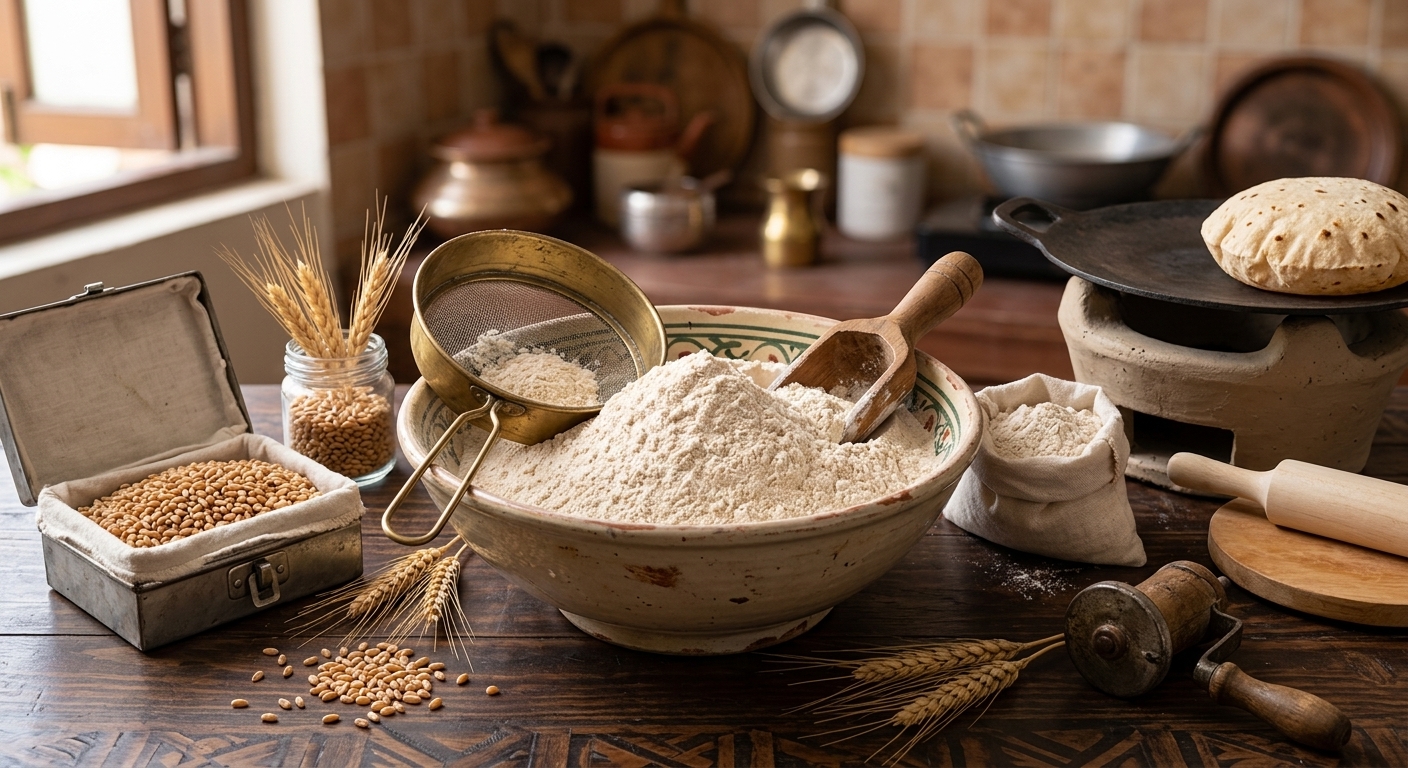
Every day when I go into the kitchen, take out whole wheat flour into the dough bowl, and begin kneading it with my hands, the soft touch and faint, earthy aroma of the flour transport me into a completely different train of thought. As the flour begins to bind with water and I press and punch the dough, my mind involuntarily drifts to the farmer who poured his sweat and devotion into every single grain.
I think of how he prepared the soil under the blazing heat and scorching sun, sowed the seeds, and stayed up through cold nights for months to irrigate the crops. Until that lush green field transforms into a golden yield and makes its journey through the mill to reach our hands as flour, it carries the silent perspiration, patience, and tireless toil of the farmer.
The moment this thought crosses my mind, my heart fills with immense gratitude. How beautiful and blessed it is that some people work so quietly and passionately for us, just so that a single morsel of sustenance can reach our plates. Suddenly, that soft dough feels like far more than just food—it feels like a priceless gift of human hard work and love.
Introduction to Wheat Flour
Wheat flour is one of the most widely consumed food staples globally, serving as the foundation for endless everyday foods including breads, rotis, pastries, cakes, and pasta. Produced by grinding dry wheat kernels (berries), it provides essential carbohydrates, protein, dietary fiber, and minerals like iron and B-vitamins.
The structure of wheat flour depends on three main parts of the wheat kernel:
-
Endosperm: The starchy inner portion, rich in gluten-forming proteins (gliadin and glutenin).
-
Bran: The hard outer shell containing dietary fiber, minerals, and antioxidants.
-
Germ: The nutrient-rich core filled with healthy fats, vitamins, and minerals.
Depending on how much of the bran and germ are retained, wheat flour is classified into varieties like whole wheat flour (includes all three parts) and refined wheat flour / all-purpose flour / maida (contains only the endosperm).
How Wheat Flour is Made
The process of converting raw harvested wheat into fine cooking flour involves several precise cleaning, conditioning, and milling steps.
1. Cleaning and Separation
Harvested wheat grains carry dust, chaff, stones, and foreign seeds.
-
Screening: Giant vibrating sieves filter out debris larger or smaller than the wheat kernel.
-
Aspiration: Air currents lift light particles like dust and chaff away from the grain.
-
Magneitc Separation: Heavy-duty magnets pull out iron or metal bits mixed in during harvesting.
2. Tempering (Conditioning)
-
Wheat grains are soaked in controlled amounts of water and rested in bins for 12 to 24 hours.
-
This step toughens the outer bran layer so it peels away cleanly without shattering into dust, while softening the inner endosperm for easier grinding.
3. Milling and Grinding
Modern commercial flour production uses roller mills, while traditional methods rely on stone mills (chakkis).
-
Break Rollers: The conditioned wheat passes through pairs of counter-rotating grooved steel rollers that gently crack open the kernel, loosening the starchy endosperm from the bran.
-
Reduction Rollers: Smooth rollers crush the coarse endosperm pieces into fine flour.
4. Sifting and Classification
-
High-speed oscillating sieves (bolters) sort the ground mixture through layered mesh screens.
-
Coarser bran and germ particles are separated from the fine endosperm powder.
-
For whole wheat flour, the ground bran, germ, and endosperm are recombined in their natural proportions. For refined white flour (maida), the bran and germ are completely removed.
5. Bleaching and Packaging
-
Freshly milled white flour is often aged naturally or treated with food-grade bleaching agents to yield a uniform white appearance and improve dough performance.
-
The flour is then weighed, packaged, and distributed for retail and commercial use.
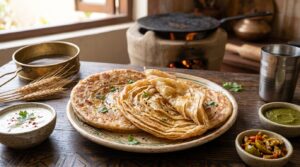
Classic Layered Wheat Flour Paratha
-
Prep time: 15 mins
-
Cook time: 10 mins
-
Yield: 4 Parathas
Ingredients
-
Whole Wheat Flour (Atta): 2 cups (plus extra for dusting)
-
Salt: ½ tsp
-
Warm Water: ¾ cup (as needed)
-
Ghee or Oil: 2 tbsp + extra for roasting
Instructions
-
Knead: Mix wheat flour and salt in a bowl. Add water bit by bit, kneading into a pliable, smooth dough. Coat with ½ tsp ghee, cover, and rest for 15 minutes.
-
Shape: Divide dough into 4 equal balls. Roll one ball into a small circle, brush the surface lightly with ghee, fold in half, brush again, and fold into a triangle.
-
Roll: Dust with flour and roll evenly into a thin triangular shape.
-
Cook: Place on a hot skillet (tawa). Cook until light spots appear, flip, spread a spoonful of ghee over top, and flip again. Press edges gently until crispy and golden brown.
-
Serve: Pair warm with fresh raita, spicy pickle, or cooked dal.


