
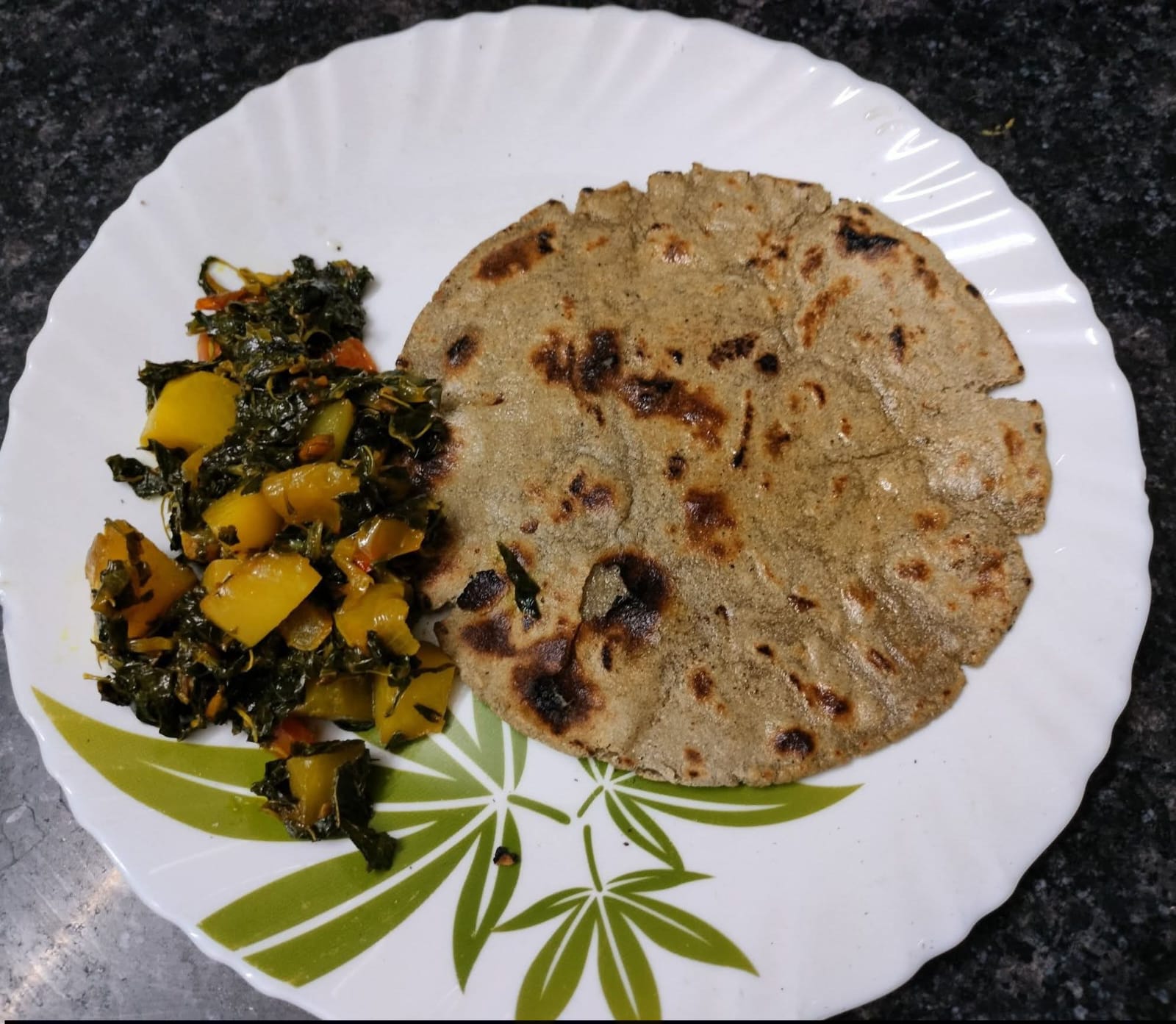
When the weather turns cool, my kitchen starts smelling of bajra. There is something deeply comforting about a warm, slightly smoky bajra roti with a dab of white butter melting on top, and nothing goes with it better than a simple sabzi of fresh cholai (amaranth leaves) and potatoes. It is the kind of plain, honest ghar ka khana that fills you up without feeling heavy.
The first time I made bajra roti, I kneaded the whole batch of dough at once, just like wheat atta. By the time I reached the third roti, the dough had dried out and every roti cracked into pieces on the tawa. That is when I learned the most important rule of bajra: it has no gluten, so it does not hold together like atta. Now I knead only enough dough for one or two rotis at a time, with warm water, and pat each one out with wet hands. The edges still crack a little, and that is exactly how a rustic bajra roti should look.
The cholai is just as simple. The leaves need a good wash because they hold soil, and they cook in minutes, so I add them only after the potatoes are almost soft. The potatoes soak up the garlic and spices, and the greens stay bright and tender.
What Are Cholai and Bajra?
- Cholai (also called chaulai or lal saag) is amaranth greens, a leafy vegetable common in Pakistan and India, with a mild, earthy taste similar to spinach. It is rich in iron, calcium and fibre.
- Bajra is pearl millet, one of the oldest grains of the subcontinent. Bajra flour makes a dense, nutty, naturally gluten-free roti that is traditionally eaten in the cooler months.
My Tips for Soft Bajra Roti
- Knead one or two rotis at a time. Bajra dough dries out and cracks if it sits.
- Use warm water and knead with the heel of your hand until the dough feels smooth.
- Pat, do not roll. Wet palms, a plastic sheet or butter paper make it easier.
- Sprinkle water on top when the roti goes on the tawa. It helps the top cook evenly and stay soft.
- Butter it while hot. Ghee or white butter keeps bajra roti soft and adds flavour.
My Tips for Aloo Cholai Saag
- Wash the leaves well in two or three changes of water.
- Use only tender stems. Thick stems stay hard and stringy.
- Cook the potatoes first, then add the greens for the last 10 minutes.
More Gluten-Free Rotis and Millet Recipes
If you enjoy flatbreads without wheat, try my rice flour roti. Leftover bajra roti also makes delicious sweet bajra choori, crumbled with ghee and gur.
If you love leafy winter greens, also try my aloo methi gajar matar, potatoes and fenugreek leaves with red carrots and peas, finished with white butter.
Another winter greens favourite from our kitchen is my sarson ka saag with chawal ki roti.

Aloo Cholai Saag with Bajra Roti
Ingredients
Equipment
Method
- Wash the cholai leaves in plenty of water two or three times, as the leaves hold soil. Drain well and chop, keeping only the tender stems.
- Heat oil in a karahi, add cumin seeds and let them splutter. Add the onion and cook until soft and light golden.
- Add garlic and green chillies and fry for a minute. Add the tomato, turmeric, red chilli, coriander powder and salt, and cook until the tomato softens.
- Add the potatoes, stir to coat, then cover and cook on low heat for 10 to 12 minutes with a splash of water, until almost tender.
- Add the chopped cholai. Stir, cover and cook for 5 minutes until the leaves wilt.
- Uncover and cook for another 4 to 5 minutes on medium heat until the water dries and the potatoes are soft. Do not overcook, or the greens lose their colour.
- Mix the bajra flour and salt. Take only enough flour for one or two rotis at a time, add warm water little by little, and knead with the heel of your hand for 2 to 3 minutes until smooth and soft. Bajra dough dries quickly, so knead each batch fresh.
- Heat a tawa on medium-high heat.
- Wet your palms and pat a ball of dough into a round roti, turning it as you go. You can also press it out on a plastic sheet or butter paper. Small cracks at the edges are normal.
- Place the roti on the hot tawa, sprinkle a few drops of water on top and spread them with your fingers. Cook for 1 to 2 minutes until the bottom has brown spots.
- Flip and cook the other side for 1 to 2 minutes, pressing gently with a cloth. Toast briefly on an open flame if you like.
- Spread ghee or white butter on the hot roti and serve with the aloo cholai saag.

)