Summer was at its peak, and in the Karachi heat my kitchen had turned into a small furnace. I had a big dawat at home that evening and I wanted to make a magnificent chicken pulao. As every Pakistani cook knows, the soul of a good pulao is its yakhni (stock).
I put the chicken and whole spices in water and read the recipe again: “Once the yakhni has simmered thoroughly, strain it, and your stock is ready.” Suddenly it hit me. I had no idea what “simmer” actually meant! My phone said it meant “to boil”, so I was about to turn the flame to high and let it bubble away.
To be sure, I called my Granny. She laughed and explained it perfectly: “Beta, simmering means cooking the meat on very low heat, with only small bubbles. It is slow, and that slowness is what pulls the flavour out of the bones and meat and gives you a rich, clear yakhni.”
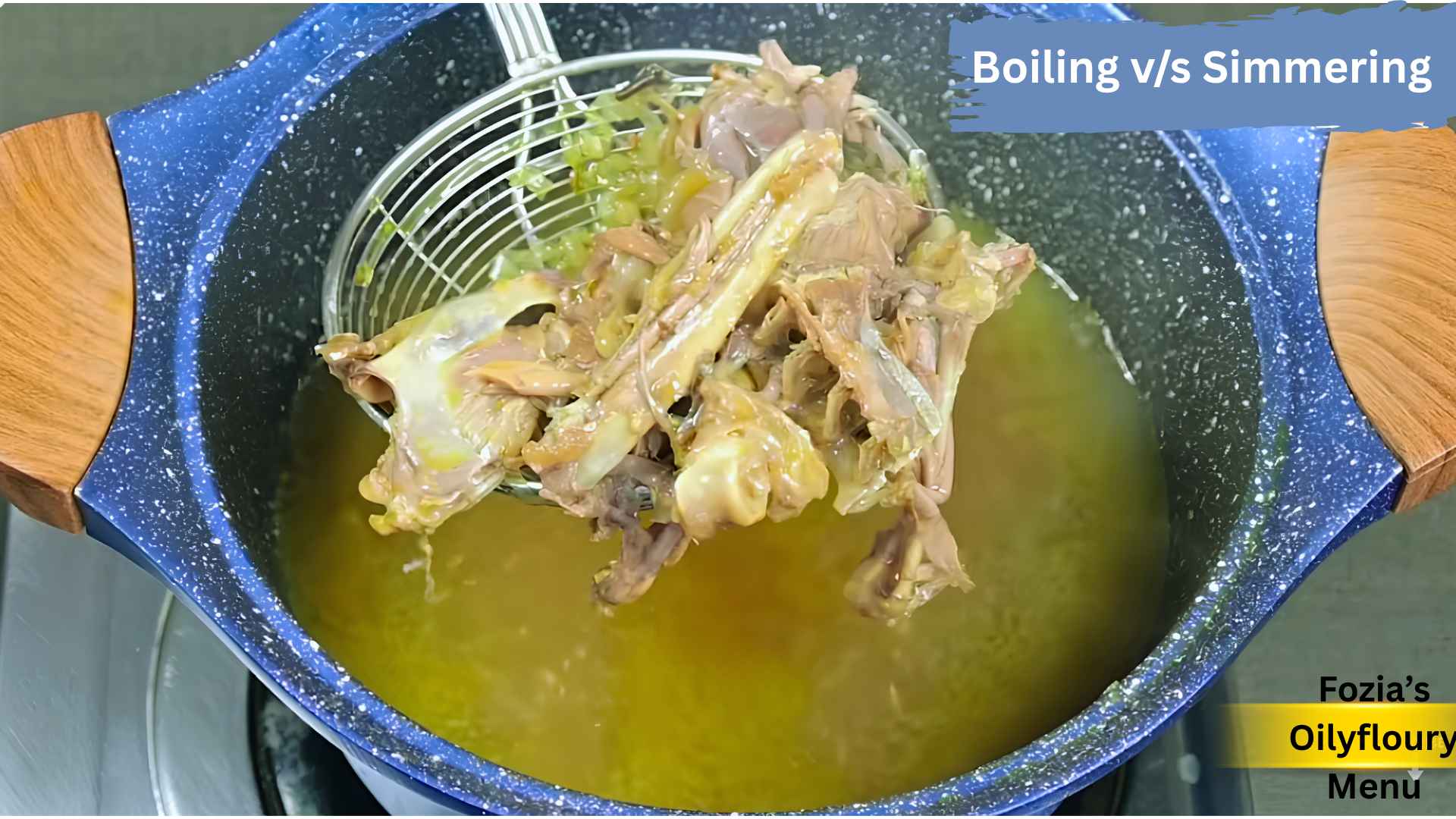
I turned the heat down, let those tiny bubbles do their work, and the stock came out golden and full of flavour. The pulao was the star of the night. Since that day I have never rushed a yakhni, and in this post I want to share everything I learned about boiling vs simmering meat, so you don’t have to panic in your kitchen the way I did.
What Does Simmering Mean?
Simmering means cooking food in liquid that is just below boiling point. The surface moves gently, and small bubbles rise slowly from the bottom of the pot, a few at a time. The temperature is roughly 85 to 95°C (185 to 205°F).
Boiling means the liquid has reached 100°C (212°F) at sea level. Large bubbles rise continuously and break the surface, and the whole pot rolls and churns.
Boiling vs Simmering: The Key Differences
| Rapid Boil | Simmer | |
|---|---|---|
| Temperature | 100°C / 212°F | 85 to 95°C / 185 to 205°F |
| Bubbles | Large, fast, constant | Small, slow, gentle |
| Flame | High | Low to medium-low |
| Effect on meat | Tightens and toughens | Becomes tender and juicy |
| Stock (yakhni) | Cloudy and greasy | Clear, golden and rich |
| Best for | Pasta, noodles, blanching vegetables, reducing sauces | Yakhni, meat curries, soups, dal, haleem, nihari |
Why Simmering Makes Meat Tender (and Boiling Makes It Tough)
Meat is made of muscle fibres held together by connective tissue called collagen. When you boil meat hard, the muscle fibres tighten quickly and squeeze out their juices, so the meat turns dry and rubbery. When you simmer gently, the fibres stay relaxed while the collagen slowly melts into gelatin. That gelatin is what makes the meat soft and gives yakhni its silky body.
Hard boiling also churns the fat and tiny bits of protein back into the liquid, which is why a boiled stock looks cloudy and greasy. A gentle simmer lets them rise to the top, where you can skim them off.
How to Simmer Meat on the Stove
- Start with cold water. Put the meat, bones and whole spices in cold water. Starting cold draws out more flavour.
- Bring it up to a boil once. Use medium-high heat until it just starts to boil.
- Skim the scum. Grey foam will rise to the top. Remove it with a spoon for a clear stock.
- Turn the heat down. Lower the flame until you see only small, lazy bubbles. This is your simmer.
- Cover partially. Leave the lid slightly open so the pot doesn’t creep back up to a boil.
- Be patient. Check now and then and adjust the flame. Add hot water if the level drops too much.
How Long to Simmer Meat: My Kitchen Chart
| What you are cooking | Simmering time |
|---|---|
| Chicken yakhni (bone-in pieces) | 40 to 50 minutes |
| Desi chicken yakhni | 1 to 1.5 hours |
| Mutton yakhni for pulao | 1.5 to 2 hours |
| Beef curry pieces (aloo gosht, qorma) | 1.5 to 2.5 hours |
| Beef or mutton bone stock | 3 to 4 hours |
| Paya, nihari, haleem meat | 4 to 6 hours or more |
These times are for a regular pot. In a pressure cooker, most meat cooks in a third of the time, but the stock will be a little less clear. You can see the simmering method in action in my chicken pulao with yakhni, my mutton pulao and my beef aloo gosht. For the longest simmer of all, see my mutton paye, cooked for 5 to 6 hours until the shorba turns rich and sticky.
When Should You Boil Instead?
Boiling is not the enemy. It is simply for different jobs: cooking pasta and noodles, blanching vegetables, bringing water up to temperature, and reducing a sauce or gravy quickly at the end. For meat, the rule in my kitchen is simple: boil to start, simmer to finish.
Frequently Asked Questions
What does simmer look like on the stove?
You should see small bubbles rising slowly and breaking the surface every second or two, with gentle movement in the liquid. If the whole surface is rolling with big bubbles, it is boiling. Lower the flame.
Is simmering the same as low heat?
Not exactly. The right flame depends on your stove and pot. Go by the bubbles, not the knob. On some stoves a simmer needs the lowest flame, on others medium-low.
Why is my yakhni cloudy?
Usually because it was boiled hard instead of simmered, or the scum was not skimmed. Next time, skim well after the first boil and keep the heat low.
Should I cover the pot when simmering?
Partially. A fully closed lid traps heat and often pushes the pot back to a boil. Leaving a small gap keeps it at a steady simmer.
How do I store leftover yakhni?
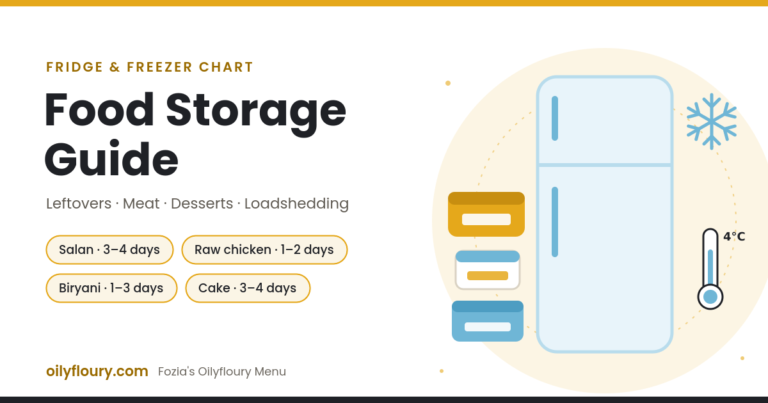
Cool it quickly, then keep it in the fridge for 3 to 4 days or freeze it in portions for up to 3 months. My food storage guide has more details.
Granny’s lesson has stayed with me for years: the best flavours are never rushed, they are coaxed out slowly. For more kitchen basics, see my kitchen measurement conversions and my guide on how to cook frozen foods.