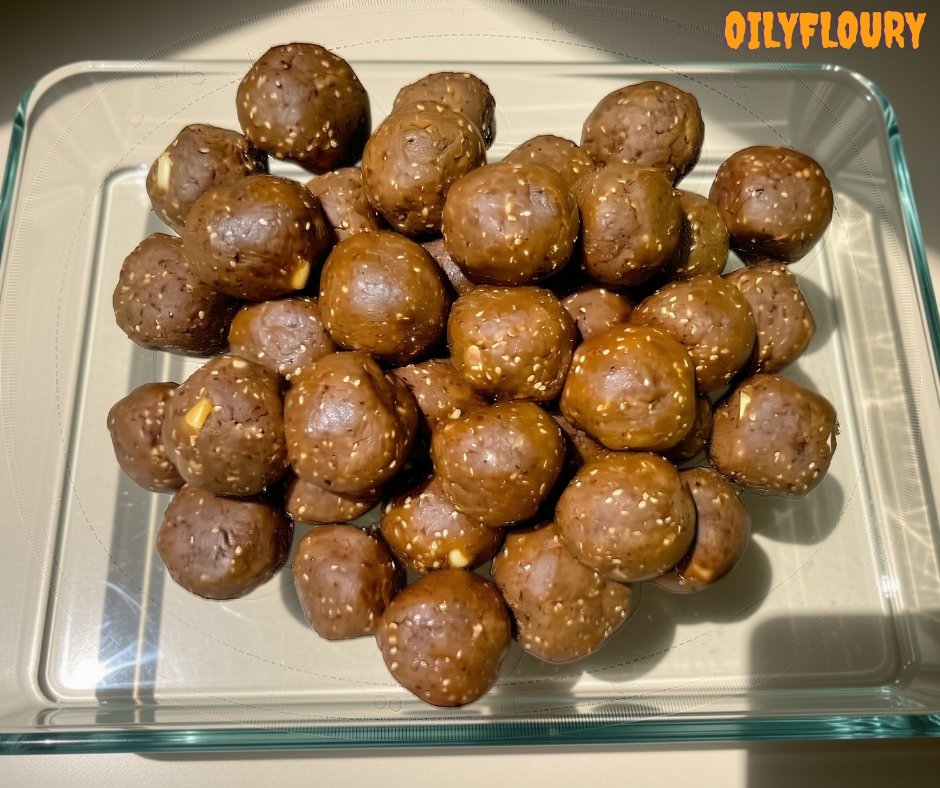
Every winter, a big steel dabba of pinnis sat on the top shelf of our kitchen, and every morning before school my mother would hand each of us one with a glass of warm milk. “Sardi mein yeh zaroor khao,” she would say. Alsi ki pinni was her favourite: roasted flaxseeds, whole wheat flour slowly bhuna in desi ghee, gur and plenty of dry fruits. The whole house smelled of roasting atta and ghee on the day she made them.
I still make them the same way, in one big batch at the start of winter. The secret is patience: the flaxseeds and atta must be roasted slowly on low heat until they smell nutty and turn golden brown, otherwise the pinni tastes raw. Gur gives a deep, caramel sweetness that sugar cannot match.
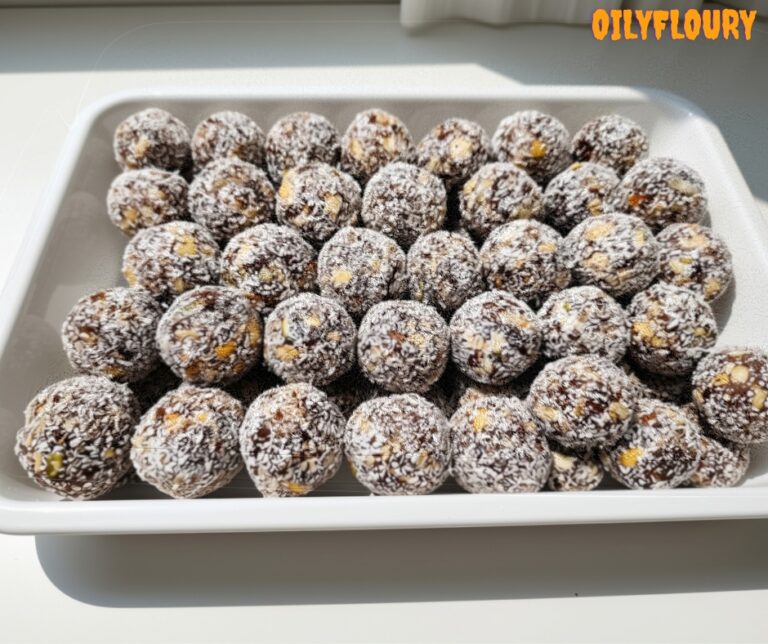
If you want a lighter, no-cook option, try my date and nut energy balls. For more winter sweets, see my gajar ka halwa and all my winter recipes.
Why You’ll Love Alsi ki Pinni
- Traditional winter sweet: a classic Punjabi recipe made for cold months.
- Wholesome ingredients: flaxseeds, whole wheat, gur, ghee and dry fruits.
- Long shelf life: keeps for weeks in an airtight jar.
- Rich, nutty taste: slow roasting brings out deep flavour.
Ingredients You Need
Alsi (flaxseeds): dry roasted and coarsely ground.
Whole wheat flour (atta): roasted in ghee until golden and fragrant.
Desi ghee: for roasting and binding.
Gur (jaggery): grated or powdered, or melted into a thick syrup.
Gond (edible gum): fried in ghee until it puffs up, then crushed.
Dry fruits and seeds: almonds, cashews, walnuts, raisins and sesame seeds, plus a little cardamom powder.
My Tips for Perfect Pinnis
- Roast alsi until it crackles. Dry roast on low heat until the seeds pop and smell nutty, then cool before grinding.
- Grind coarsely. Pulse in short bursts; over-grinding releases oil and turns it into a paste.
- Roast the atta slowly. 15 to 20 minutes on low heat until deep golden. Raw atta ruins the taste.
- Fry the gond properly. It should puff up fully, or it will be hard and chewy.
- Shape while warm. The mixture binds best when still warm. Add a spoon of warm ghee if it crumbles.
How to Eat and Store
Eat one pinni a day in winter, ideally in the morning with warm milk or tea. Store in an airtight jar at room temperature for up to 3 weeks in winter, or in the fridge for up to 2 months.
Alsi ki Pinni
Ingredients
Method
- Dry roast the alsi on low heat for 5 to 7 minutes until the seeds crackle and smell nutty. Cool and grind coarsely.
- Heat 2 tbsp ghee and fry the gond until it puffs up. Remove, cool and crush. In the same pan, lightly roast the nuts and sesame seeds and set aside.
- Add the remaining ghee to the pan with the atta. Roast on low heat, stirring continuously, for 15 to 20 minutes until golden brown and fragrant.
- Add the ground alsi and roast together for 3 to 4 minutes.
- Turn off the heat and let it cool slightly. Add the gur, crushed gond, nuts, sesame seeds, raisins and cardamom. Mix well; the warmth will soften the gur.
- While still warm, take a handful and press firmly into round pinnis. Add a spoon of warm ghee if the mixture crumbles.
- Cool completely and store in an airtight jar.
Notes
Frequently Asked Questions
What is alsi in English?
Alsi is flaxseed (also called linseed), a small brown seed that is rich in fibre and healthy fats.
Why are my pinnis not binding?
The mixture has cooled down or needs more ghee. Warm it slightly and add a spoon of melted ghee, then shape again.
Can I use sugar instead of gur?
Yes, use powdered sugar or bura. Gur gives a richer, more traditional taste and colour.
Can I skip the gond?
Yes. Gond is traditional in winter pinnis but optional. The pinnis will still be delicious without it.
How many pinnis should I eat a day?
Pinnis are rich in ghee and calories, so one a day is a good amount for most people.