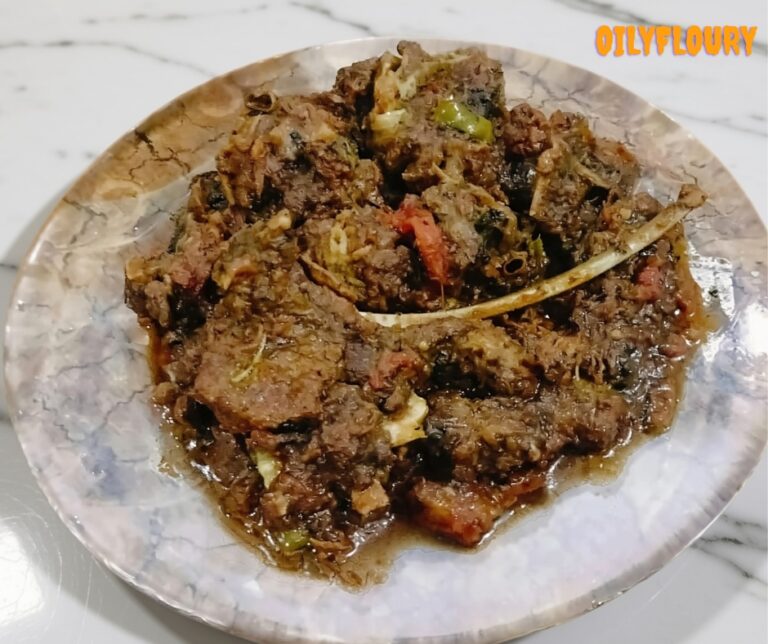
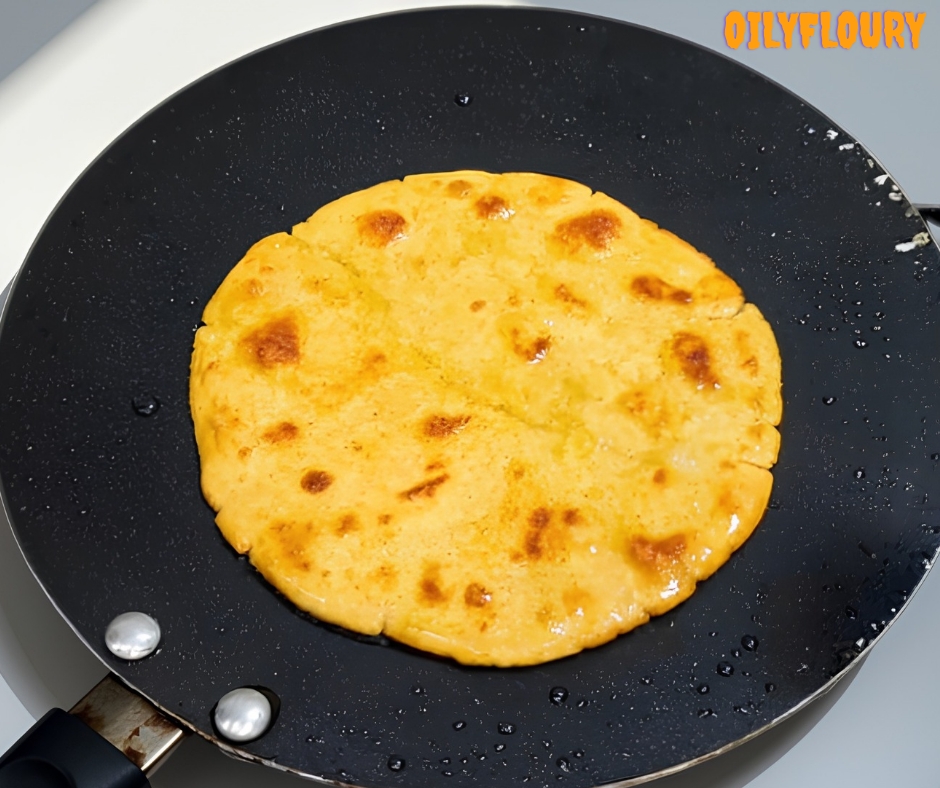
In winter, the day sarson ka saag is cooked in our house, someone has to stand at the tawa making makki ki roti, and that someone is usually me. The first few rotis I ever made broke into pieces the moment I lifted them, and I almost gave up. My mother laughed and showed me the trick: knead the makki atta with warm water for a long time, keep your palms wet, and pat the roti gently instead of rolling it. Since that day, my rotis come off the tawa whole, golden and soft, with crisp brown spots and a little white butter melting on top.
Makki ki roti is made from maize flour (cornmeal), which has no gluten, so it does not stretch like wheat dough. That is why it cracks so easily. The secret is warm water, patience while kneading, and making one roti at a time.
Serve it with my sarson ka saag for the classic winter meal. To understand the different types of corn flour, read my guide cornmeal vs corn flour vs masa harina. More warm dishes are in my winter recipes.
Why You’ll Love This Makki ki Roti
- No cracking: warm water and long kneading give a soft, workable dough.
- Only 3 ingredients: makki atta, salt and warm water.
- Naturally gluten-free: made with pure maize flour.
- Winter classic: the perfect partner for saag and white butter.
Ingredients You Need
Makki ka atta: fine yellow maize flour (cornmeal). Fresh flour works best; old flour cracks more.
Warm water: warm, not hot, so you can knead comfortably.
Optional: a tablespoon of wheat flour for beginners, finely chopped fresh methi or coriander, and ghee or white butter for serving.
My Tips for Soft Makki ki Roti
- Knead only what you need. Makki dough dries quickly. Knead a small portion for 2 to 3 rotis at a time.
- Knead with the heel of your palm for 3 to 4 minutes until the dough feels smooth and soft.
- Keep your hands wet. Wet palms stop the dough from sticking and cracking.
- Pat, don’t roll. Press the ball between your palms, or pat it on a plastic sheet or butter paper.
- Use a medium-hot tawa. Too hot and the outside burns before the inside cooks.
- Beginner trick: add 1 tablespoon of wheat flour per cup of makki atta for extra binding.
What to Serve With Makki ki Roti
Sarson ka saag with a big spoon of white butter is the classic pairing. It is also delicious with gur (jaggery), a glass of lassi, or any desi sabzi and daal.
Storing
Makki ki roti is best eaten fresh and hot. You can keep the dry flour for a few weeks in an airtight jar, but always knead the dough just before cooking.
Makki ki Roti
Ingredients
Method
- Mix makki atta, salt and wheat flour (if using) in a wide bowl.
- Add warm water a little at a time and knead with the heel of your palm for 3 to 4 minutes until the dough is smooth, soft and does not crack when pressed.
- Heat a tawa on medium heat. Take a lemon-sized portion of dough, knead it again for a few seconds and roll into a ball.
- With wet palms, gently pat the ball into a round roti about 1/4 inch thick, or press it on a plastic sheet or butter paper.
- Carefully place it on the tawa. Cook for 1 to 2 minutes until the bottom sets, then flip.
- Cook the other side until golden brown spots appear, pressing the edges gently with a cloth. Flip once more if needed.
- Remove, top with white butter or ghee and serve hot with sarson ka saag.
Notes
Frequently Asked Questions
Why does my makki ki roti break?
Maize flour has no gluten. Use warm water, knead for a few minutes, keep your hands wet and make one roti at a time. Adding a little wheat flour also helps.
Can I roll makki ki roti with a rolling pin?
Yes, between two sheets of plastic or butter paper. Roll gently and peel off the top sheet before flipping it onto the tawa.
Is makki ki roti gluten-free?
Yes, if made only with pure maize flour. Skip the wheat flour trick if you need it fully gluten-free.
What is the difference between makki atta and cornflour?
Makki atta is ground whole maize and is yellow and slightly coarse. Cornflour (corn starch) is a fine white powder used for thickening and cannot be used for roti.
Should I add ghee while cooking?
You can brush a little ghee on both sides at the end for a crisp finish, or serve it plain with white butter on top.