
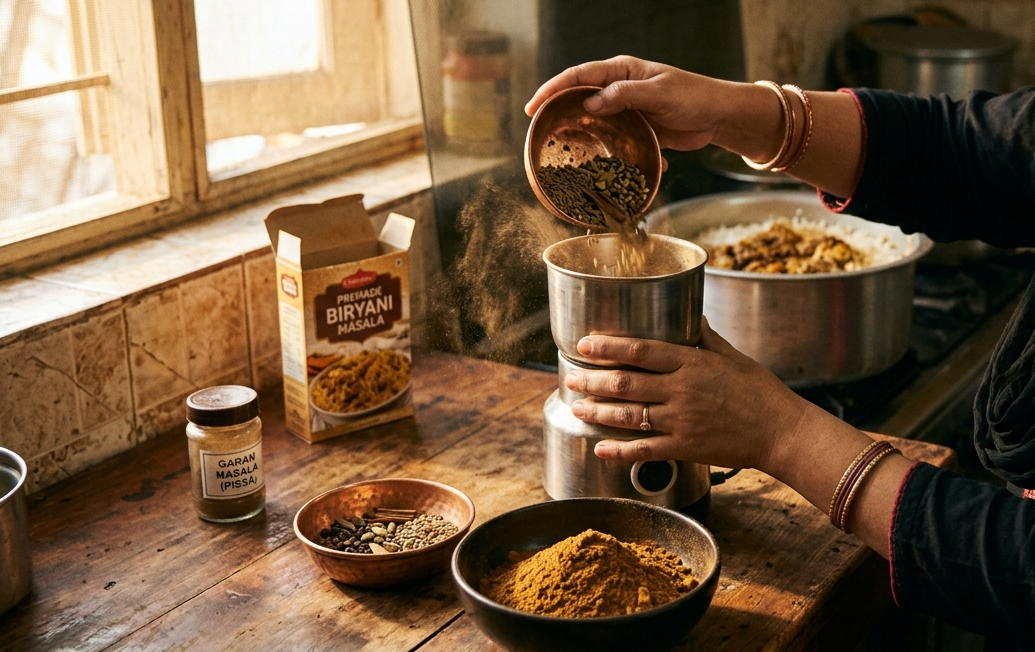
Today, when all the ingredients for the biryani were prepared and it was time to put the qorma on the stove, I opened the jar only to realize that the premade biryani masala was completely finished. For a moment, I didn’t know what to do, but then I spotted ground garam masala sitting there and wondered if I should just add it during cooking—maybe it would make up for the missing biryani masala. But then I decided to do a little research first to see how it would taste if I added garam masala; the research revealed that, oh no, the taste would change totally, the color of the rice would change, and the flavor would too! Realizing this just in time, I quickly took out the grinder and added the dry biryani masala ingredients—cumin, cloves, cinnamon, black cardamom, green cardamom, nutmeg, mace, coriander seeds, fennel seeds, dry whole red chilies. and black peppercorns—and ground them into a powder. I add staranise and dry plum after grinding biryani masala. My very own handmade biryani masala was ready, and its fresh aroma not only saved my biryani from a disaster but made it taste even better than before!
Biryani Masala and Garam Masala are not the same
Though they share a common base of warm whole spices. Think of garam masala as a foundational, highly concentrated spice finisher, while biryani masala is a complete, multi-layered seasoning blend tailored specifically for rice and meat.
Key Differences Breakdown
| Feature | Garam Masala | Biryani Masala |
| Primary Purpose | Accentuate warmth and aroma; typically sprinkled near the end of cooking. | Build deep flavor and complex aroma throughout the rice and gravy layering process. |
| Flavor Profile | Pungent, warm, earthy, and highly concentrated. | Fragrant, complex, slightly tangy, with floral and sweet notes. |
| Core Ingredients | Cumin, coriander, black pepper, cloves, cinnamon, cardamom (green/black). | Basic garam masala spices plus mace (javitri), nutmeg (jaiphal), star anise, fennel seeds, bay leaf, stone flower (kalpasi), and often red chili, turmeric, or dried plum/mango powder for tanginess. |
| Usage Amount | Small quantities (¼ to 1 tsp per dish). | Larger quantities (tablespoons per pot of biryani). |
Key Ingredient Profile
-
Garam Masala Focus: It concentrates on sharp, heating elements like black peppercorns, cloves, cumin, and cinnamon. Its main job is to add a punch of warmth (garam) without altering the color or acidity of the dish drastically.
-
Biryani Masala Focus: It incorporates delicate aromatic top notes alongside heavy spices. Ingredients like mace, nutmeg, star anise, and fennel give biryani its distinct festive aroma, while added chili and souring agents balance the rich fat of meat and ghee.
Can You Substitute One for the Other?
Short Answer: You can use garam masala as a base to make biryani in a pinch, but using biryani masala in everyday curry will likely overpower it with floral aromas.
-
Substituting Biryani Masala with Garam Masala: If you run out of biryani masala, use your standard garam masala as the base, but elevate it by grinding in extra green cardamom, a blade of mace, a pinch of nutmeg, a pinch of fennel seeds, and a single star anise.
-
Substituting Garam Masala with Biryani Masala: Use sparingly. Because biryani masala contains heavy aromatics (like mace and star anise) and extra heat/sour notes, using too much in a standard gravy or stir-fry can overpower the natural flavor of the vegetables or meat.

)